
“History doesn’t repeat itself, but it often rhymes.” – Mark Twain
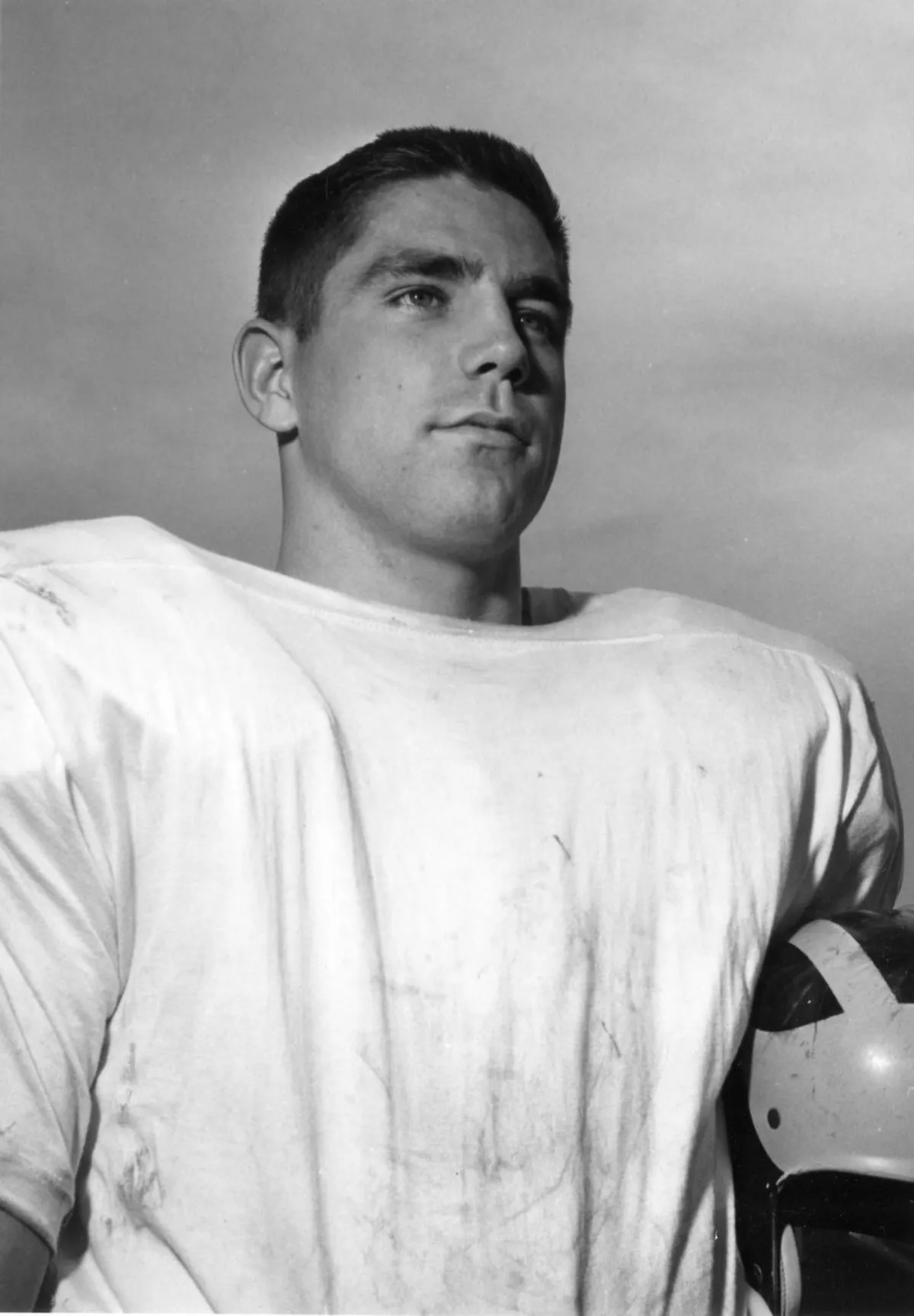
That sentiment feels especially fitting at Michigan when looking at the lives of Thomas James Smull (UM Football, 1904) and his grandson, Thomas Parkhill (UM Football, 1962–1965). Though separated by sixty years, both men found themselves on championship teams and carried forward a legacy of football and family at Michigan.
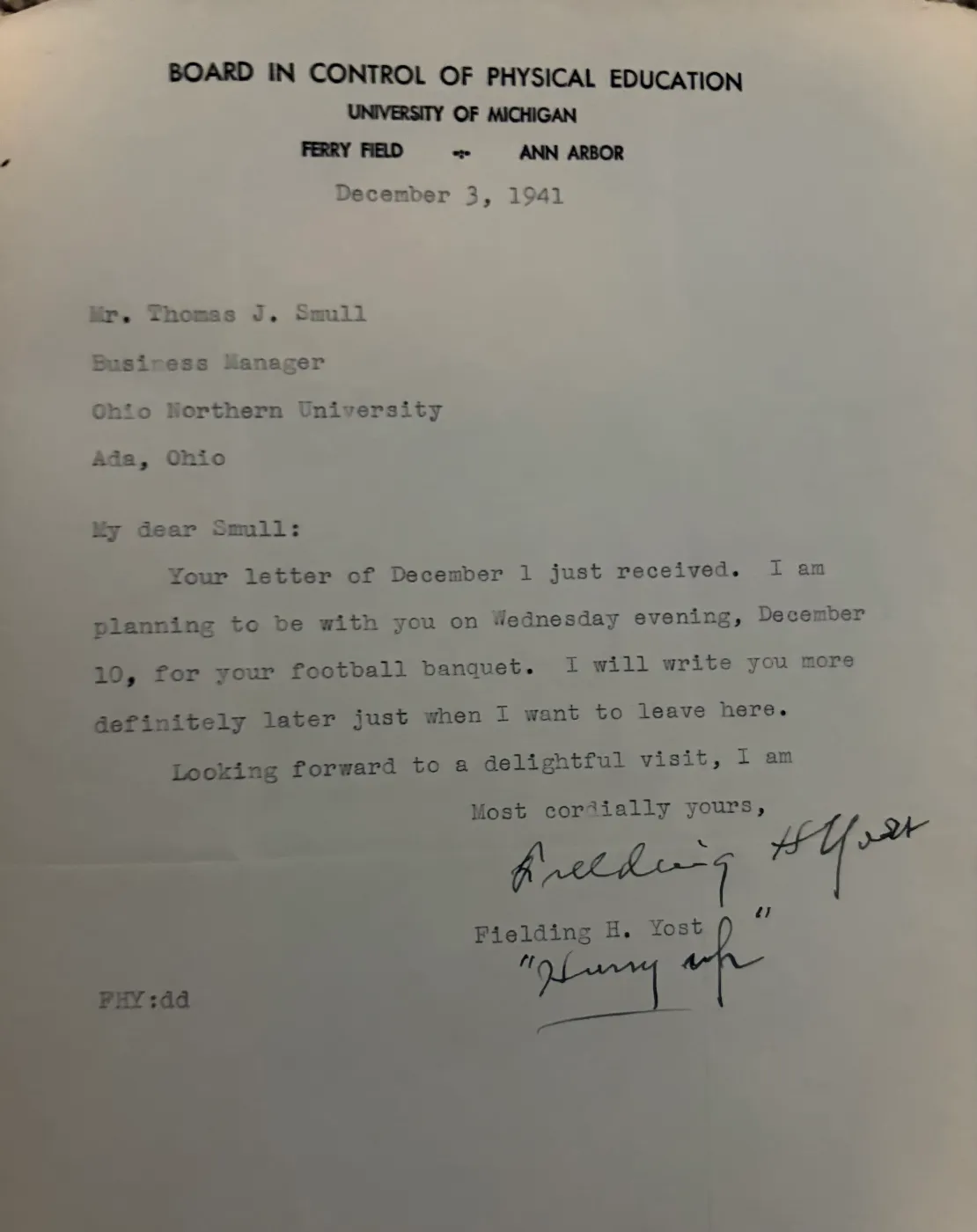
FAM had the privilege of exploring this shared history through Tom Parkhill and his family’s collection of memories and documents about his grandfather.
Thomas Smull: From Hardship to National Champion
Adversity struck Smull at an early age. In 1889, a severe flood destroyed his father’s successful store in Mackeyville, Pennsylvania, sweeping remnants 60 miles downstream and leaving the family penniless. With no expectation of financial help for college, Smull would enroll at Ohio Normal (later renamed Ohio Northern University) years later to further his education.
Coincidentally, Ohio Normal was the same college future Michigan coach Fielding Yost discovered football while studying law in 1890. Yost later recalled in his recollection of Ohio Normal, “There was a hedge fence at each end of the campus on which we played, and the idea was to kick the ball over our opponent’s heads. Our game was nothing more than impromptu affairs. We would choose sides and go for it. Often there were 100 players on each side.”
Football had evolved by the time Smull played from 1900 to 1903. A standout athlete, he captained both the football and baseball teams while earning his civil engineering degree. In 1903, his Ohio Normal team faced Yost’s powerhouse Michigan squad and suffered a lopsided 65–0 defeat. But Yost, then building his famed “point-a-minute” teams, noticed Smull’s talent.
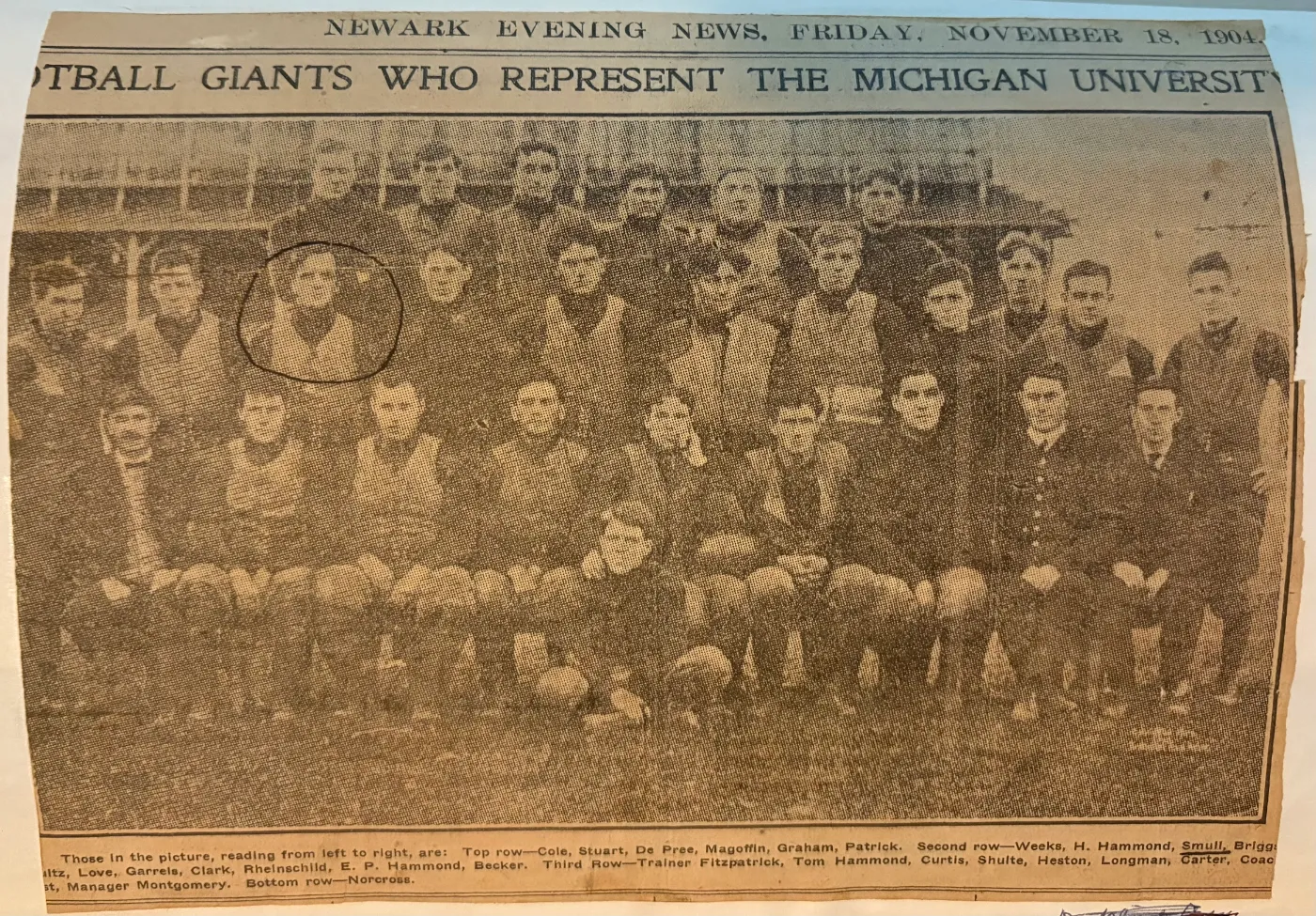
Ready to put his degree to use, Smull planned to move on from football. Instead, Yost persuaded him to come north to Ann Arbor, continue his engineering studies, and join the Wolverines in 1904. With little more than Yost’s promise, Smull took the leap.
A Season of Glory
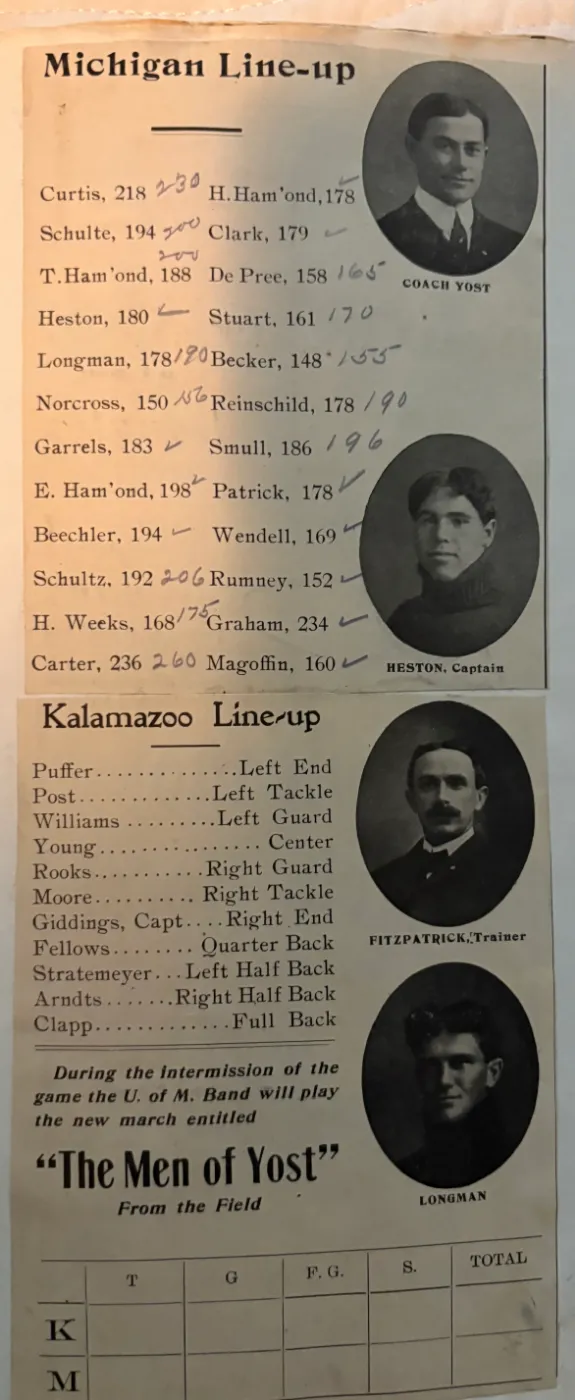
Newspapers soon took note of Smull once on campus. “Another prize choice fell to Coach Yost,” one wrote. “He strips down to 190 pounds and looks to be about the best of the recruits.”
Smull anchored the offensive line, opening holes for College Football Hall of Famer Willie Heston and also credited with three fumble recoveries on the defensive side, enroute to a perfect 10–0 season. The Wolverines outscored opponents 567–22, claiming their fourth straight national championship.
Football was still in its rugged infancy. Players went both ways, the forward pass was not yet part of the game, and linemen like Smull wore belts with trunk handles on their backs so the line could be pulled together for plays. Yet Yost’s system was far ahead of its time—Heston recalled that Michigan had 52 different plays in 1904, a testament to the team’s sophistication.
That season was Smull’s only at Michigan, but it changed the course of his life.

Educator and Builder
After graduating with his engineering degree, Smull accepted, after declining twice, the role of Dean of the College of Engineering at Ohio Northern in 1905. Over nearly four decades he served as head of engineering, faculty manager of athletics, and even head football coach for two seasons. He also guided Ohio Northern into the Ohio Athletic Conference.
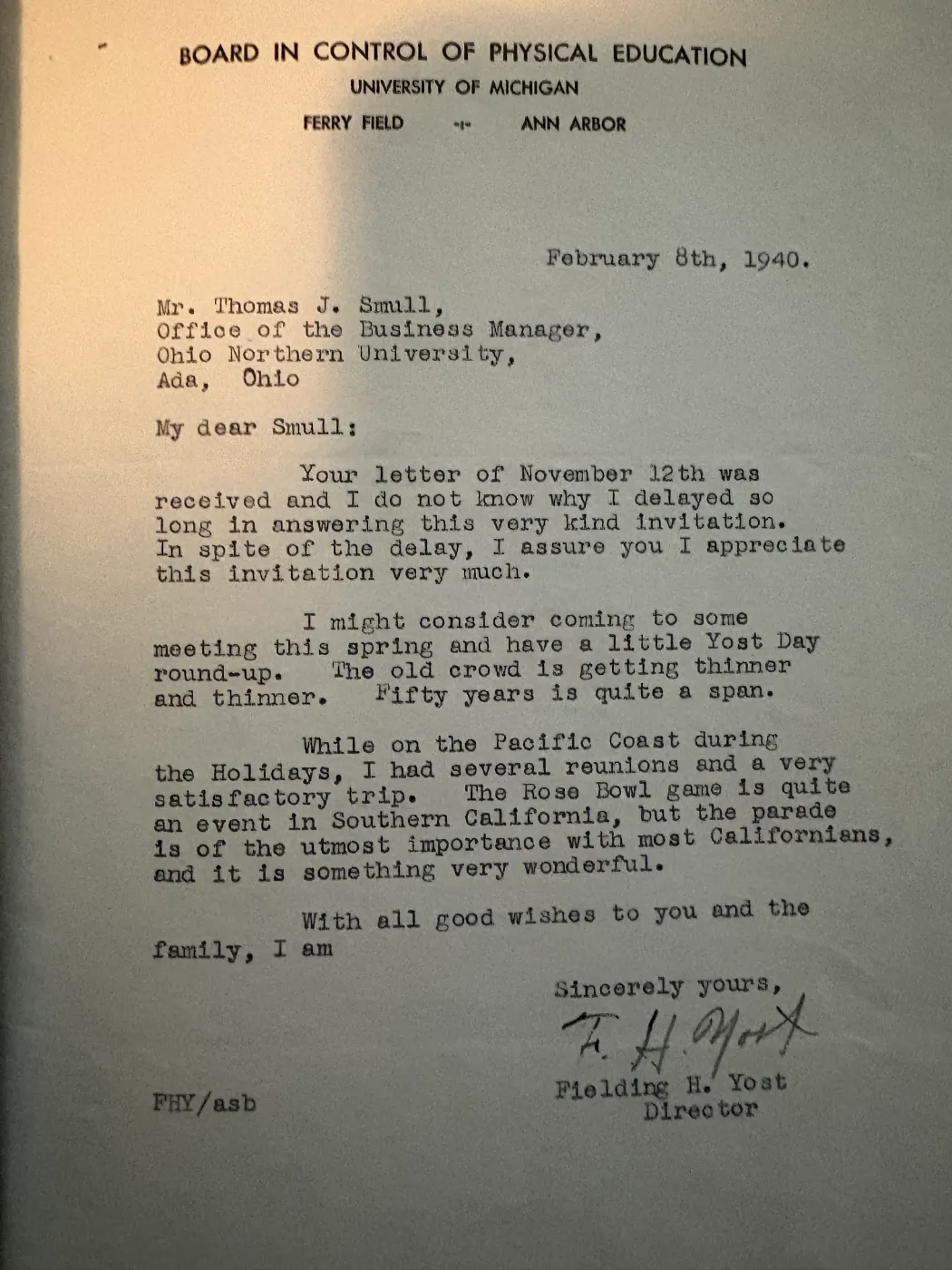
Upon his retirement in 1942, Smull moved into private industry, but consistently kept in touch with his former coach, writing letters back in forth and attending events at each other’s campus, something Yost did not accept from many. Today, the T.J. Smull College of Engineering bears his name, and he was inducted into the Ohio Northern Athletics Hall of Fame in 1968.
Although he never pressured his children toward football or Michigan, Smull’s admiration for the university echoed throughout his career. That passion surfaced again nearly sixty years later in his grandson, Tom Parkhill.
Tom Parkhill: Carrying the Torch
Parkhill grew up in Ada, Ohio, spending 18 years with his grandfather under the same household roof. Like Smull, he excelled in multiple sports, earning 16 varsity letters in high school and All-State honors as a quarterback. Initially, he wanted to play for Woody Hayes at Ohio State, but the Buckeyes signed another quarterback earlier that year.
Unbeknownst to him, Parkhill’s uncle—who had earned a master’s degree in aeronautics at Michigan—had been quietly writing letters to Coach Bump Elliott about Tom’s abilities and coach Elliott and staff were paying attention. When the offer came, Parkhill accepted, despite never having visited Ann Arbor, just as his grandfather had decades earlier.
Life as a Wolverine
In 1962, Parkhill arrived at South Quad for camp. “I took a look around and realized that I was one of six quarterbacks on the team,” he recalled. Freshmen weren’t eligible for varsity, so he spent that year on the freshman squad before switching to wide receiver under Coach Jack “Jacko” Nelson. Simply making the 44-man travel team was a daunting challenge in those years.
“Practices were brutal, and competition was fierce,” Parkhill said. “On Sundays after games, those who didn’t play would scrimmage against the freshmen. We called it the ‘toilet bowl,’ and they were physical battles.”
Michigan struggled during his first two seasons, but fortunes changed in 1964. That year’s team boasted 17 future NFL players, including Bobby Timberlake, Tom Mack, Mel Anthony, John Henderson, and Jack Clancy. That season, the Wolverines won the Big Ten title, defeated Navy and Heisman Trophy winner Roger Staubach, and capped the season with a Rose Bowl berth after a 10–0 win over Ohio State in Columbus.
The Rose Bowl Experience
Parkhill initially wasn’t selected for the 44-man travel squad to Columbus in 1964 but found his way there helping announcer Bob Ufer spot players from the press box. “Bob was a terrific individual,” Parkhill recalled. “He had his Coke-bottle glasses on and the window open in the freezing cold while calling the game through a haze. I was in just a shirt and tie, but I didn’t care,” laughed Parkhill on the experience.
Ufer, while best known for calling Michigan games, was himself was a decorated Michigan athlete, once setting a world indoor record in the 440-yard dash. A record Parkhill was sure to mention in the conversation. Of note, Ufer’s famous “Meechigan” call, is borrowed from Fielding Yost, who had used it in 1901 when he first stepped off the train in Ann Arbor.
After Michigan clinched the Rose Bowl bid, Coach Nelson added Parkhill to the Pasadena 44-member travel squad, assigning him to role as demo quarterback of Oregon State star, Paul Brothers in practices. “The Rose Bowl was a trip of a lifetime,” Parkhill said. “We stayed in a monastery on a hill overlooking the parade below where I remember seeing the glitter in the air from the morning Rose Bowl Parade.”
Michigan dominated, defeating Oregon State 34–7 in all phases. Mel Anthony rushed for three touchdowns, including an 84-yard run that set a Rose Bowl record to go along with a blocked punt. Parkhill remembered laughing that the only man who might have caught Anthony was his own lineman, future NFL Hall of Famer Tom Mack, sprinting stride for stride beside Anthony on the record setting run.
Parkhill played 11 snaps before a triceps injury ended his day getting injured on a “60 Kill” defensive call. Surgery followed soon after, but he had been part of history.
Earning His Letter and Life After Football
Parkhill returned for his senior year, determined to earn his varsity letter. “In those days, you had to log a certain number of minutes to qualify,” he explained. “When Bo Schembechler came along, all of that changed for the better in terms of a letter,” Parkhill further elaborated; however, by handling holds on extra points and field goals, along with game action at receiver, he met the requirement and earned his letter in 1965.
After graduating, Parkhill married in 1967 and joined General Motors. When he showed up to interview, he was met by Bruce Hilkene, captain of Michigan’s 1947 national championship team. “I just remember seeing that M ring during the interview,” Parkhill said. He was hired into the training program at Willow Run, run by another member of the ’47 team, George Johnson, and into the workforce Parkhill went.
Over 34 years, Parkhill worked in labor relations at multiple GM locations before retiring in 2000. Like his grandfather, though, he continued working, joining a Michigan-based office supply company where he still contributes today, often mentoring today’s workforce.
Two Eras, One Legacy
Though separated by sixty years, Thomas Smull and Thomas Parkhill followed strikingly similar paths—both overcoming adversity, both representing Michigan football, both carrying their love of the university into long professional careers. Their stories are part of the larger fabric of Michigan history: one generation after another finding ways to write their own chapter in maize and blue.
– Brian Resutek
I was a teammate of Tom Parkhill , Parky; he was and is a very upbeat guy. Like many of us The 1965 Rose Bowl experience changed my life. Being in California and playing on New Years was a dream come true.
Go Blue.