
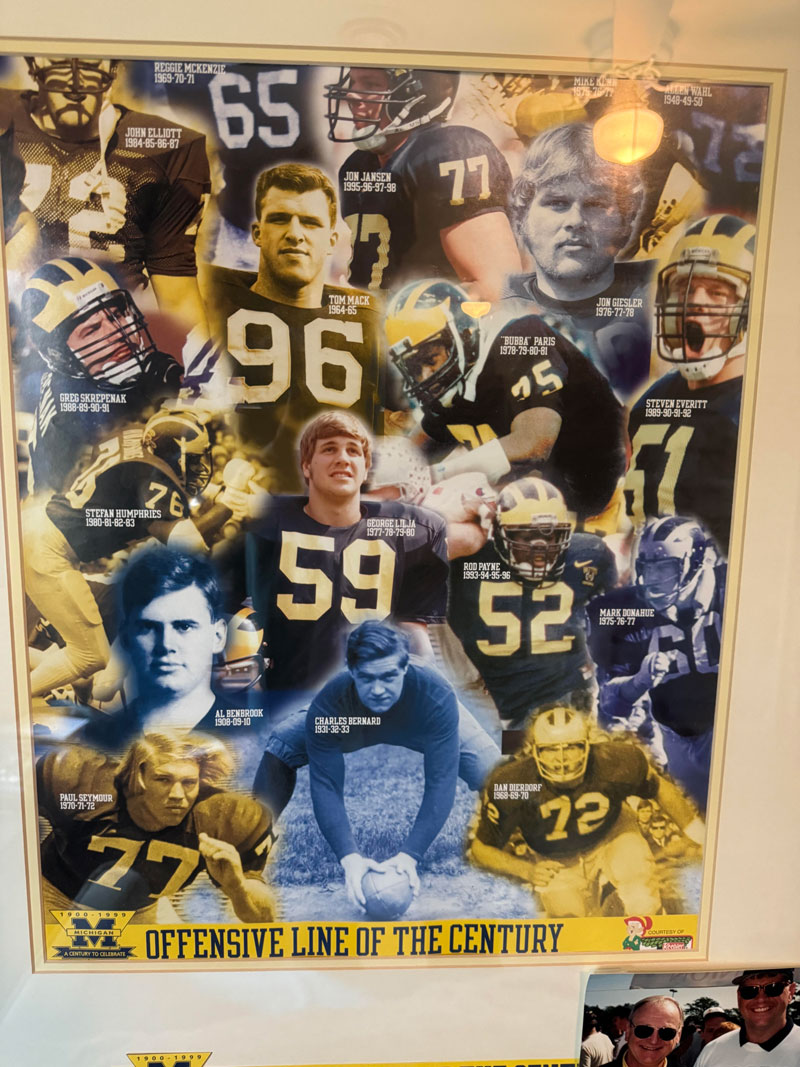
As part of The Wolverine Life series, FAM recently caught up with former Michigan captain and All-American George Lilja, who anchored the Wolverines’ offensive line from 1976–1980 before spending eight seasons in the NFL and later building a successful career in medical services leadership.
For Lilja, the journey began with one unforgettable walk into Michigan Stadium.
“This can’t be the stadium.”
That was his first thought during his recruiting visit to Ann Arbor. From the outside or rather street-level, Michigan Stadium can appear modest. But once he entered and emerged near the top rows overlooking the massive bowl below, the reality hit him. “I realized I was entering at about the 99th row and looking down where there would be 100,000 screaming fans, on game days” Lilja recalled with a laugh. “That changed everything.”
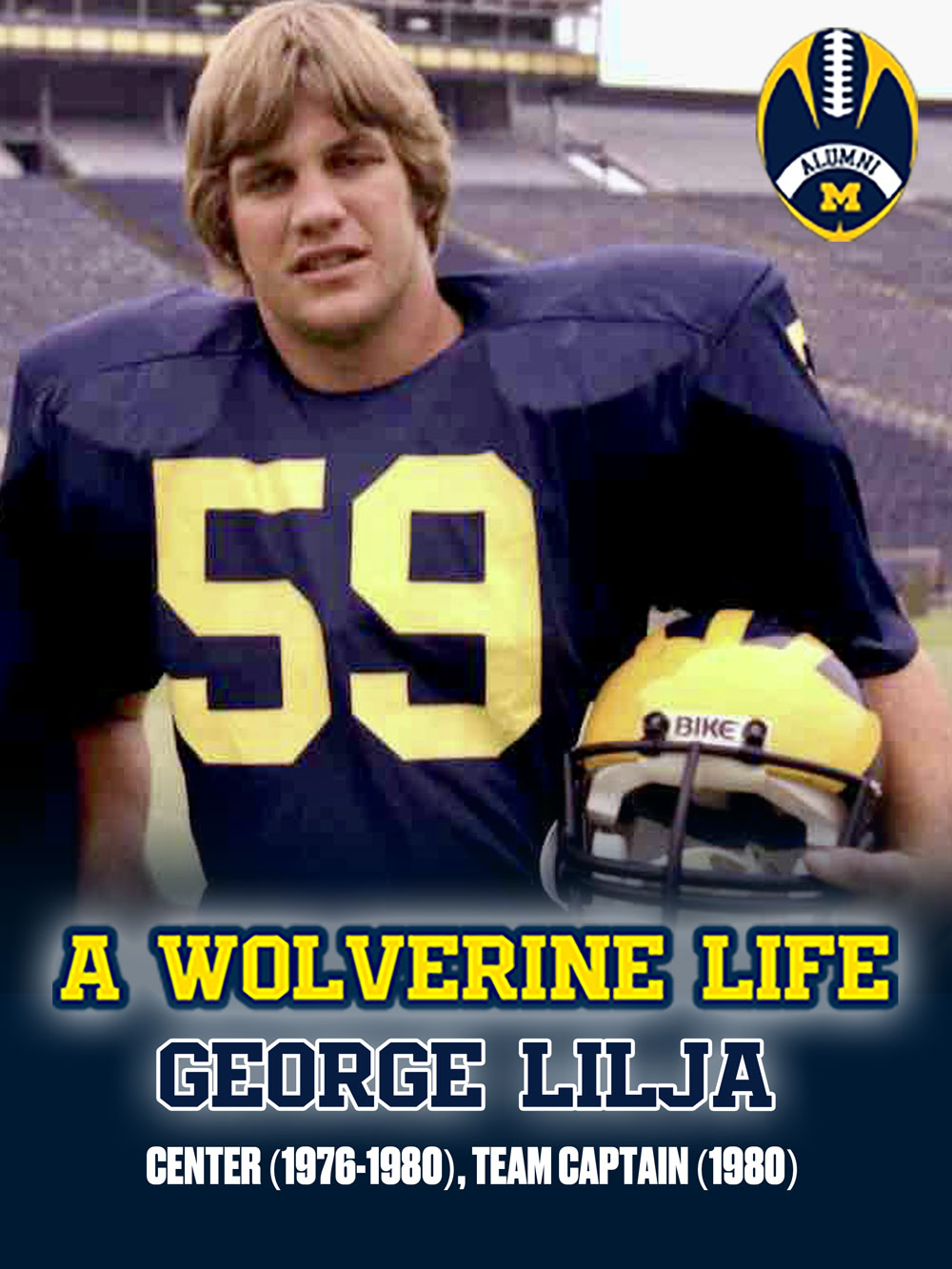
Growing up just outside Chicago in a family of ten, sports were woven into daily life. Baseball and football dominated George’s childhood, but by his senior year of high school, football had clearly won out. Major programs in and out of the Big Ten footprint pursued him heavily. “I remember meeting Bo for breakfast Sunday morning in his office during my visit,” Lilja said. “Bo told me he couldn’t officially offer a scholarship for another two weeks because of NCAA rules, but his handshake was as good as a contract.” For Lilja, that was enough. He returned home and told his parents he planned to become a Wolverine, despite already having a recruiting trip scheduled to the University of Miami the following week.
“I had my bags packed and the Miami coach actually came to our house to drive me to the airport,” Lilja said. “But my mom stopped me before I walked out the door. She reminded me I had already given Bo my word.” The conversation that followed was uncomfortable. “It was pretty embarrassing telling the Miami coach I wasn’t going on the plane with him,” Lilja laughed. “But I wasn’t about to argue with my mother.”
Years later, Lilja learned the importance of his handshake contract. Every Monday, Bo Schembechler reportedly reviewed which recruits continued taking visits after verbal commitments. Thanks to his mother’s tactical blocking skills, George Lilja never appeared on that list.
The handshake held. Ann Arbor was next.
Michigan Awaits
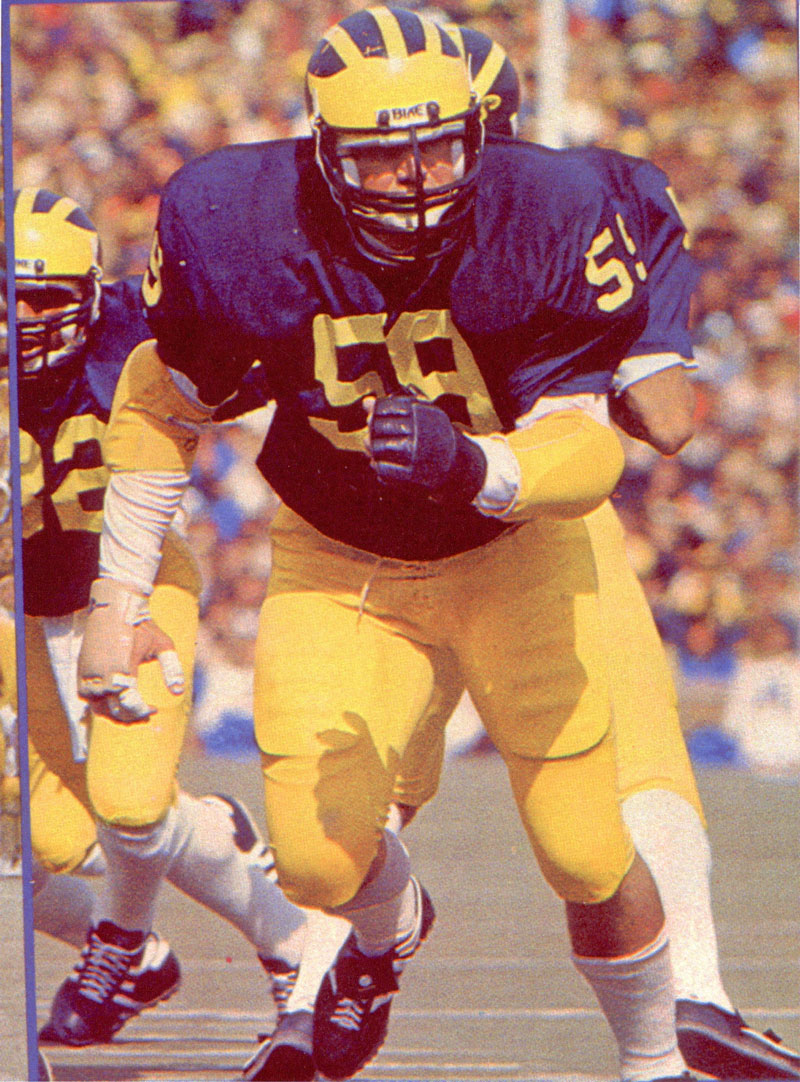
Arriving for training camp in August 1976 was another shock entirely. “I walked into the weight room with freshmen Johnny Wangler and Mel Owens and saw Calvin O’Neal bench pressing more weight than I could count,” Lilja recalled. “I immediately thought, ‘I’m never going to play a down here.’” Ironically, O’Neal would become one of the most influential figures in Lilja’s development.
As a freshman center on the JV and demonstration squads, Lilja spent practices lining up directly across from the powerful Michigan captain. “Calvin was basically immovable,” Lilja said. “Coach Moeller probably thought I was going to get somebody killed out there because of all the freshman mistakes.” But O’Neal also modeled what leadership looked like inside the Michigan program. He mentored younger players, with Lilja recalling O’Neal taking him on a run around the gold course as a freshman, instilling the standards of discipline and leadership that stayed with Lilja long after O’Neal graduated.
“He saw leadership qualities in me before I saw them myself,” Lilja said.
The $4,000 Breakfast
Like most freshmen, Lilja learned quickly that life under Bo Schembechler balanced intimidation with humor. One of his favorite memories came near the end of fall camp.
The team had a mandatory 6 a.m. breakfast before players transitioned from camp housing into their permanent dorm assignments. Lilja showed up on time, ate breakfast, and noticed almost immediately that none of his teammates had arrived. Later that day, Schembechler stormed into the team meeting room furious.
Bo slammed his playbook to the floor and barked that Michigan football had just spent $4,000 feeding a team breakfast attended by exactly one player. After several seconds of silence, Schembechler demanded to know who it was. Somewhere in the back of the room, a nervous freshman George Lilja slowly raised his hand. Bo paused, looked at him, and deadpanned: “I hope you got enough to eat, George.” The room exploded.
From Fifth String to Captain
Development came quickly after that.
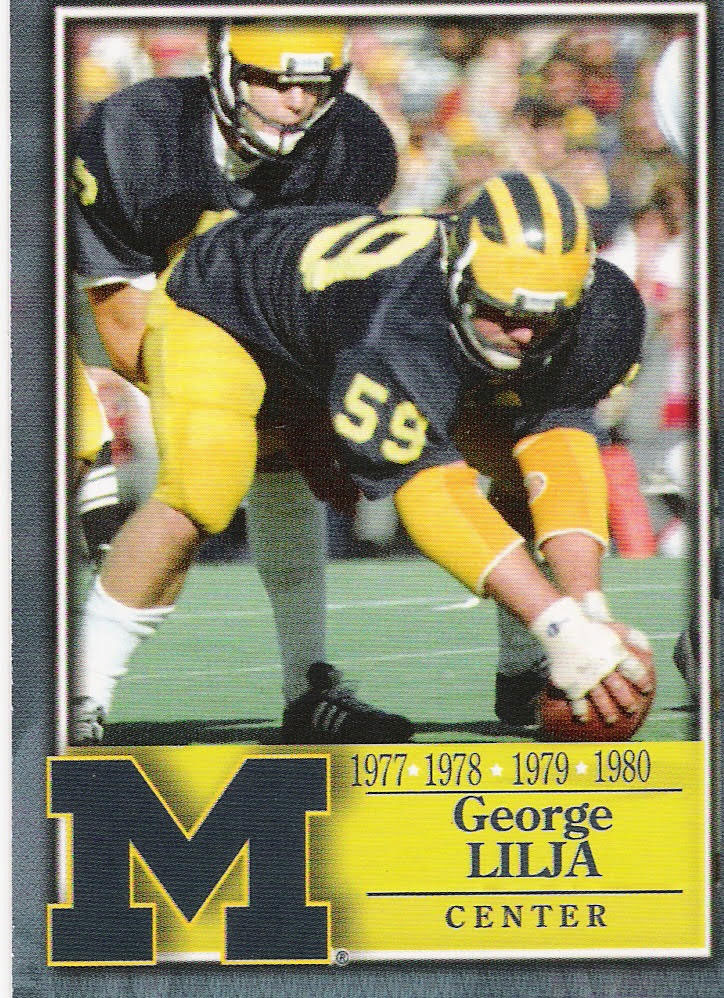
Under offensive line coaches Paul Schudel and Jerry Hanlon, Michigan consistently produced All-Big Ten linemen and NFL talent. Lilja steadily climbed the depth chart from fifth string and demo-team center into a full-time starter by his senior and 5th year red-shirted senior seasons. By 1980, he was voted team co-captain alongside Andy Cannavino.
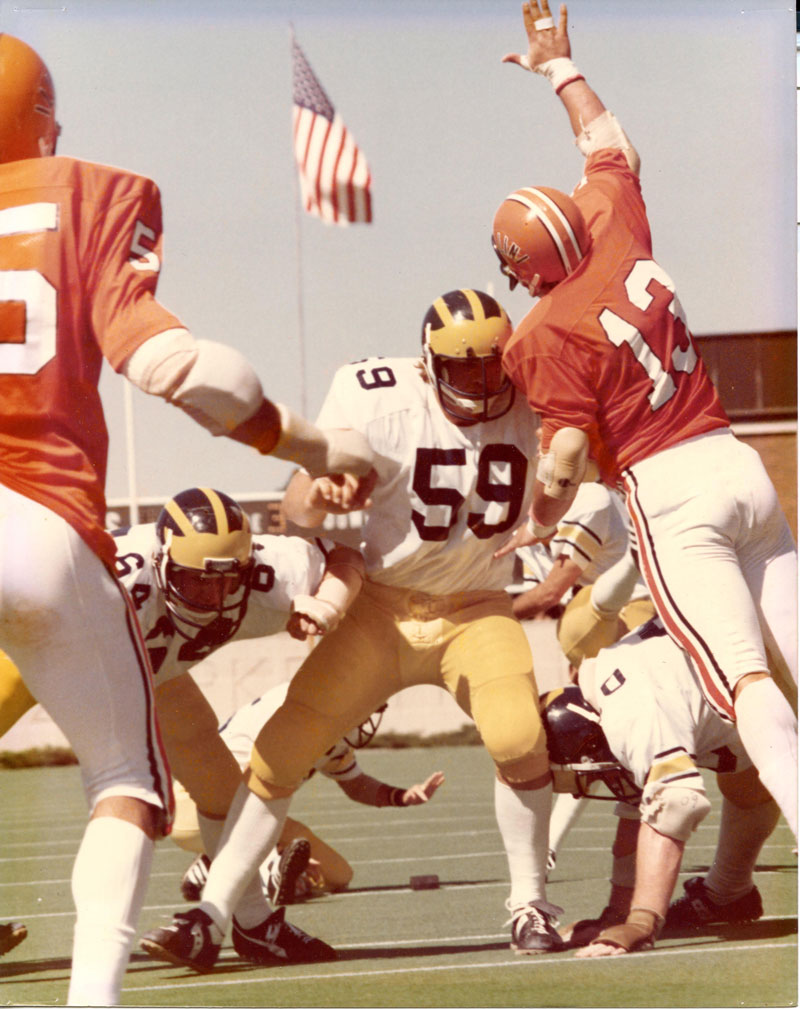
Leadership ran in the Lilja family. George and his brothers, Larry Lilja at Northwestern and David Lilja at Indiana all served as captains at their respective universities, creating what is believed to be the only trio of brothers to captain football programs at three different Big Ten schools. The 1980 Wolverines finished with a Big Ten championship and Bo Schembechler’s first Rose Bowl victory, defeating Washington to cap one of the program’s defining seasons.
Michigan’s offensive line dominated throughout the year, with every starter earning All-Big Ten recognition. Lilja was named an All-American. “That season, we felt like we could take the ball 80 yards anytime we wanted and never give it back,” Lilja said. “Then the defense would force a three-and-out.”
The Wolverines closed the season ranked No. 4 nationally after holding opponents without a touchdown over the final 22 quarters of football.
The Call That Almost Went Unanswered
When his Michigan career ended, Lilja believed the NFL was in the cards. At the time, NFL teams still mailed letters to players expressing interest before the draft. “I had heard from the Lions and the Rams and was invited to the combine,” Lilja said. “Mel Owens and I went together. Everybody knew Mel was going in the first round.” In 1981, ESPN televised the NFL Draft for the first time.
Lilja watched from his apartment with a few teammates and his girlfriend, Meg, who would later become his wife, while it seemed his father called every 30 minutes asking for updates. Late in the day, the phone rang again. “I almost didn’t answer it because I figured it was my dad checking in again,” Lilja laughed. “I picked up the phone and immediately started telling him I still hadn’t been drafted.” Then came a long silence. On the other end was Los Angeles Rams head coach Roy Malavasi. The Rams had selected George Lilja in the fourth round, and the following week expected George in California for initial team workouts.
The Business Side of Football
Lilja spent two seasons with the Rams alongside former Michigan teammate Mel Owens before being released prior to the start of the 1983 season.
Now married and technically unemployed, the reality of the business side of the NFL hit Lilja, and like others in Hollywood, he needed to find his next role, which week 4 that season. Just two days after the infamous L.A. Rams vs the N.Y. Jets game in Shea Stadium, where both benches emptied with a big midfield fight, involving Mark Gastineau and Jackie Slater, the New York Jets picked up and signed Lilja to an NFL contract.
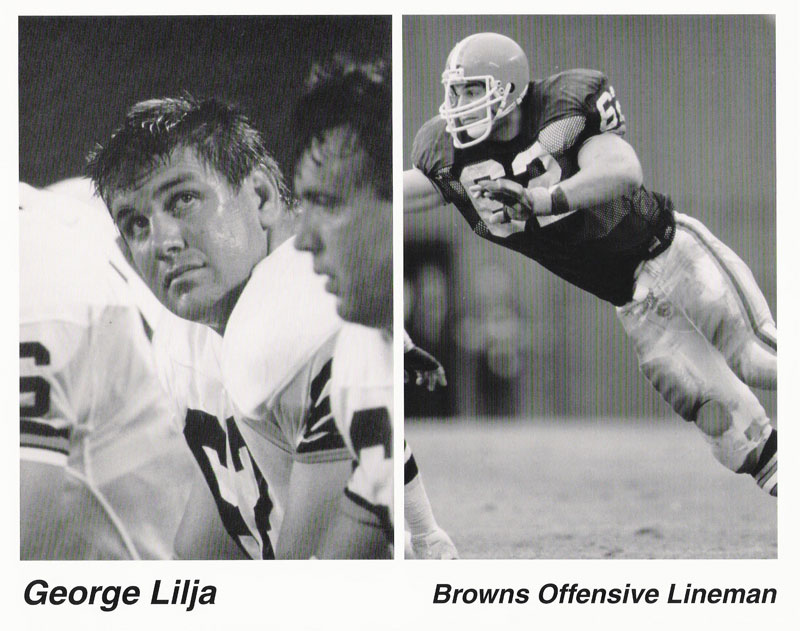
“When I got to New York, the first thing the current players did, when they learned I just came from the Rams, was to pull out the game film to make sure I wasn’t involved in the fight,” Lilja joked. Lilja finished the season with the Jets, but another difficult moment arrived near the end of the 1984 season. “Back then, if there was a black plastic bag taped to your locker after practice, it meant you’d been cut,” Lilja recalled. “I walked in and saw the bag hanging there with four games left in the season and wasn’t sure if I would get another chance at football.”
That week, George and Meg packed their belongings and headed to Chicago to temporarily stay with family as they assessed what might be next. As they drove through Cleveland, Lilja remembered listening to the Browns on the radio. By the time they arrived in Chicago, his father had another message waiting.
“The Browns’ general manager had been trying to reach me,” Lilja said. “They wanted me in Cleveland immediately.” Seventy-two hours later, Lilja was back in pads and playing on Sundays once again.
Cleveland, Marty, and “The Drive”
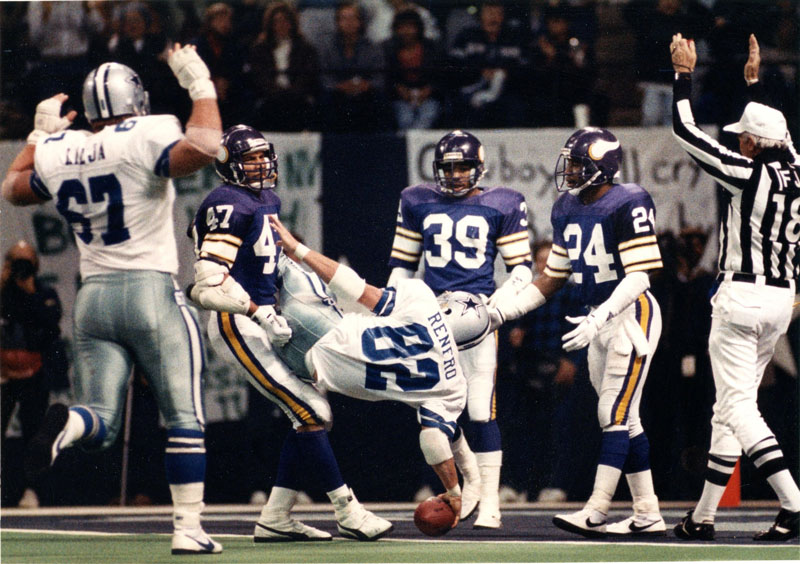
Cleveland ultimately became the defining chapter of Lilja’s NFL career. Playing under future coaching legend Marty Schottenheimer who was promoted midseason in 1984 to head coach, Lilja helped anchor a strong Browns line. He blocked for the outstanding rushing tandem of Earnest Byner and Kevin Mack, who each surpassed 1,000 rushing yards during the 1985 season (only the third duo to accomplish the feat at the time). Success led to playoffs, which unfortunately in 1986 ended in the AFC Championship Game against the Denver Broncos and “The Drive” game where the Browns lost due to late game John Elway heroics.
“I was fortunate to have faith, family, and great mentors along the way,” Lilja said while reflecting on his NFL journey. Additional stops with Dallas and Atlanta followed before he retired after eight professional seasons. Among Lilja’s favorite memories was playing on Thanksgiving Day for legendary Cowboys coach Tom Landry.
Leadership Beyond Football
Football may have ended, but leadership remained central to Lilja’s life.
After retiring from the NFL, he received advice from former University of Washington quarterback and eventually Cleveland Brown’s teammate, Tom Flick, ironically the captain of the Huskies team Lilja and Michigan defeated in the 1981 Rose Bowl and launched a motivational speaking company for two years. George would then find success in the medical imaging and MRI sales areas. Over the next two decades, Lilja worked closely with hospital systems and clinics, helping model expansion strategies, growth opportunities, and operational planning.
“It sounds cliché, but it really comes down to relationships,” Lilja said. “A lot of people who crossed paths with me earlier in life ended up impacting me years later.” Now retired, Lilja remains active in coaching high school football along with volunteering in multiple organizations, and spending time with his children and grandchildren.
For a player who once walked into Michigan Stadium convinced he would never see the field, George Lilja’s journey became something much larger than football. It became a life shaped by preparation, resilience, loyalty and one unforgettable handshake.
Rapid Fire with George Lilja
Favorite Ann Arbor Restaurant:
Gandy Dancer
Favorite Bo Quote:
“I hope you got enough to eat, George.”
Who Recruited You to Michigan?
Former Michigan quarterback and coach Dennis Brown
Most Impressive Players Faced or Played With:
- Tim Krumrie (Wisconsin and Cincinnati Bengals) — “An absolute force at nose tackle.”
- Mike Singletary (Chicago Bears)— “He knew every play before the snap.”
- Howie Long (LA Raiders) — “The smartest and most talented guy on the field.”
- Mark Gastineau and Joe Klecko (NY Jets teammates)
Best Games at Michigan:
“The Michigan State game and the Ohio State game. The first play against Ohio State was basically a fistfight and then we played football. The Michigan State game felt like a fistfight the entire afternoon.”
— Brian Resutek
George was a great teammate, team captain and friend!
How FUN! Seeing an article about you, George. I remember fondly our casual friendship in Ann Arbor in the late 1979’s. Some of those memories: trying to push hard enough on that big sweaty guy to help you stretch… trying to get you enough to eat at a dinner with friends from Baptist student union /packard road Baptist church…. You inviting me to go to breakfast with you where you were meeting with agents…. Norm betts wedding…. You pulling me up by the collar of my winter coat and bouncing me. While yelling “touchdown !” ( me telling you to stop and then you slipping on the icy sidewalk & an me looking down over you and saying “next time, you’ll stop when I tell you to stop!” . I remember the last time talking with you when seeing you and your brother out of nowhere at a michigan hockey game in Chicago at the small college hockey arena . Wishing you the best, Ron williamson DDS Mich’78